Hoi An is a 15th-century trading port on the Thu Bon River that somehow survived war, modernisation, and mass tourism without losing the thing that makes it worth visiting. The Ancient Town is genuinely old - Japanese merchant houses, Chinese assembly halls, a covered bridge built in 1593 - and it still functions as a neighbourhood where people live, cook, and go about their day alongside the tourists walking through it.
It is small. You can walk the entire Ancient Town in 20 minutes without stopping. Most people end up staying three or four days anyway because the pace of the place is hard to leave. Good coffee, tailors who can make a suit in 48 hours, river-facing restaurants, and a beach 4 kilometres away. It is one of those towns that adjusts your definition of a good day.
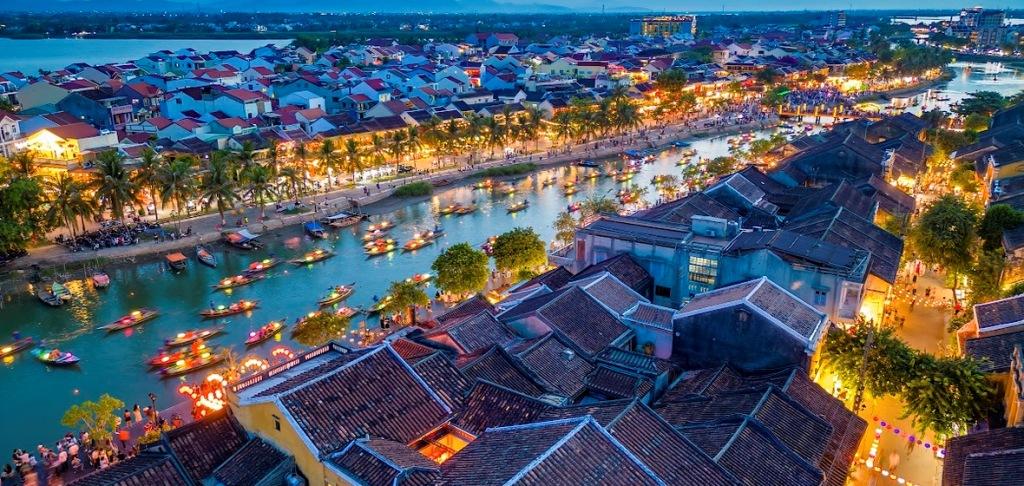
The lanterns are real. They are not a set piece for photographs - local families put them out every evening and on the 14th of each lunar month the town switches off its electric lights entirely and runs on lanterns alone. If your dates happen to line up, it is one of the more memorable things you will see in Vietnam.
Top Places to Visit
The Japanese Covered Bridge is the most photographed structure in Hoi An and worth seeing despite that. Built by the Japanese merchant community in the late 16th century, it connects the Japanese and Chinese quarters of the old town and has a small temple built into it. Go early morning before the groups arrive.
The Chinese Assembly Halls are scattered through the Ancient Town and most are still active places of worship. The Fujian Assembly Hall is the most elaborate - red lacquer, incense smoke, and a courtyard that feels genuinely removed from the street outside.
Tan Ky Ancient House is a private merchant residence that has been in the same family for seven generations. It shows the architectural mix that made Hoi An unusual - Japanese roof construction, Chinese decorative details, and Vietnamese carved screens all in one building. Entry costs a nominal fee covered by the Ancient Town ticket.
An Bang Beach is 4 kilometres from the town centre and one of the better beaches on the central Vietnamese coast. Less developed than Da Nang's beaches, quieter during the week, and close enough that you can be there in 10 minutes by bicycle.
Day Trips from Hoi An
My Son Sanctuary is 40 kilometres west of Hoi An - a cluster of Hindu temples built by the Cham kingdom between the 4th and 14th centuries. Many were damaged during the war but enough remains to make it one of the more significant archaeological sites in Southeast Asia. Half a day is enough. Go early before the heat sets in.
Da Nang is 30 kilometres north and reachable in under an hour. The Marble Mountains, the Dragon Bridge, and the Museum of Cham Sculpture are worth combining into a day trip if you have not already stopped there in transit.
Best Time to Visit Hoi An
February to April is the most reliable window - warm, mostly dry, and the river is calm. May and June are hot but manageable. October and November are the months to avoid - the central coast gets its heaviest rainfall during this period and the Thu Bon River floods regularly, sometimes putting parts of the Ancient Town underwater. December and January are cool and dry and increasingly busy with tourists.
Getting Around
The Ancient Town is entirely walkable. Bicycles are available to rent from almost every guesthouse for around USD 2 a day and cover the distance to the beach and surrounding villages easily. Motorbike taxis and Grab work for longer distances. The town is small enough that you rarely need more than a bicycle for anything during your stay.
Read MoreThree days is the sweet spot. One day for the Ancient Town and its sites, one day for the beach and a cooking class or tailor fitting, one day slower - a bicycle ride through the rice paddies to the Tra Que vegetable village, or a boat trip on the Thu Bon River. Two days works if your schedule is tight. Four days is not too many if you find the pace suits you.
The Ancient Town, the lanterns, the tailor shops, and the food. Cao lau - thick noodles with pork and greens made with water from a specific local well - is a Hoi An dish you cannot authentically get anywhere else. White rose dumplings are another local speciality. The town is also a UNESCO World Heritage Site, one of the best preserved trading ports in Southeast Asia.
Yes, and it tends to exceed expectations. Most people arrive thinking it will be a pretty but overly touristy town and leave having genuinely liked it. The Ancient Town is more functional and less stage-managed than it looks in photographs. The surrounding countryside - rice paddies, fishing villages, vegetable farms - adds a lot if you get on a bicycle and go beyond the centre.
The Full Moon Lantern Festival happens on the 14th of every lunar month. The town switches off electric lights and runs entirely on lanterns for the evening. It is not a single annual event - it happens every month. Check the lunar calendar for your travel dates. The atmosphere is genuinely different from any other evening in town.
About 30 kilometres by road, roughly 45 minutes to an hour depending on traffic. Grab is the easiest option from Da Nang city or the airport. Taxis and private transfers work too. There is no direct train or bus between the two - you need a car or motorbike. Most visitors fly into Da Nang Airport and transfer directly to Hoi An on arrival.
Yes, if you use a reputable one and allow enough time. The better shops need at least 48 hours for a fitting, adjustment, and final pickup. Do not commission something on your last day in town. Prices are significantly lower than equivalent tailoring elsewhere. Bring reference photos of what you want and be specific about fit - vague instructions produce vague results.
Cao lau first. White rose dumplings. Banh mi from Phuong's cart on Phan Chau Trinh Street, which has been called the best banh mi in Vietnam often enough that the queue is now part of the experience. Com ga - chicken rice - from the market stalls. Morning Glory restaurant on the river does a good cooking class if you want to learn rather than just eat.
Yes. The town is walkable, the beach is close, the food is accessible, and the pace is slow enough that children are not rushed through things. The cooking classes work well for older children. The bicycle rides through the countryside are manageable for kids who can ride. The Ancient Town has no vehicle traffic inside, which makes walking with young children considerably less stressful than most Vietnamese cities.
Da Nang is a modern city with beaches, a growing food scene, and good transport connections. Hoi An is a small ancient town 30 kilometres away with almost no modern development in its centre. Most travellers use Da Nang Airport to arrive and then base themselves in Hoi An, which is quieter, more atmospheric, and better suited to a slower trip. Da Nang works better as a day trip from Hoi An than the other way around.
Yes. It is one of the safer towns in Vietnam for solo travel. The Ancient Town is well-lit and busy in the evenings. Petty theft is less of a concern here than in Ho Chi Minh City or Hanoi. Solo women travellers generally report feeling comfortable. The main practical consideration is transport after dark outside the centre, where Grab is the sensible option over walking.