
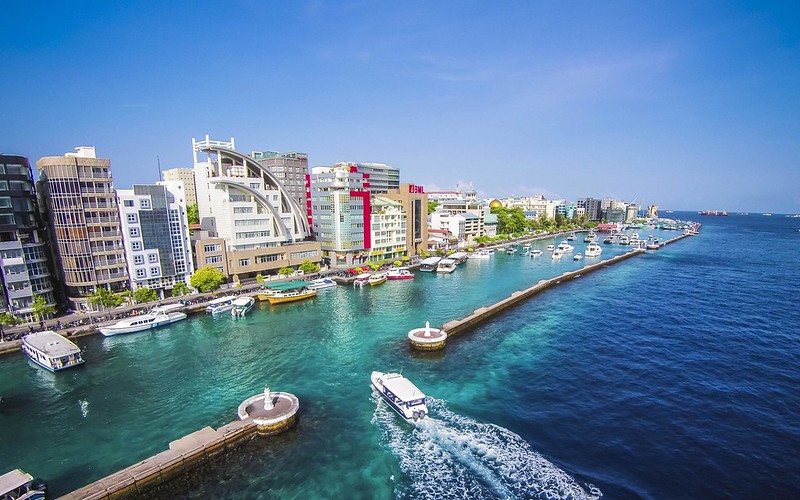
About Male
Male is one of the most densely populated cities on earth, packed into roughly two square kilometres in the middle of the Indian Ocean. Most visitors treat it as a transit point - fly in, clear immigration, take a speedboat to a resort - and miss it entirely. That is understandable, but spending even a day here gives the rest of a Maldives trip more context.
The city is the commercial and cultural heart of the country. Markets, mosques, government buildings, and local restaurants sit within walking distance of each other. The streets are narrow, motorcycles outnumber cars, and the waterfront is active at almost any hour. It is a genuine city rather than a resort - which, depending on what you are looking for, is either its limitation or its appeal.
Velana International Airport sits on the adjacent island of Hulhule, connected to Malé by the Sinamalé Bridge. The bridge also links to Hulhumalé, a planned reclaimed island that has grown into a secondary city with its own beach and accommodation.
Top Places to Visit
Grand Friday Mosque is the largest mosque in the Maldives, identifiable by its large golden dome. Known formally as Masjid Al-Sultan Muhammad Thakurufaanu Al Auzam, it holds up to 5,000 worshippers and is the dominant landmark in the city. Non-Muslims can visit outside prayer times.
Hukuru Miskiy (Old Friday Mosque) was built in 1658 from coral stone, with intricately carved walls and wooden lacquerwork. It is the oldest mosque in the Maldives and one of the finest examples of traditional Maldivian craftsmanship. A short walk from the waterfront.
National Museum in Sultan Park holds royal artefacts, ancient weapons, manuscripts, and objects from both the Buddhist and Islamic periods of Maldivian history. The building is small but well organised and covers the country's history from the 12th century onward.
Malé Fish Market on the waterfront is where the daily catch comes in - mostly tuna, which is the backbone of Maldivian cuisine. Early mornings are the most active. It is one of the more photographically rewarding spots in the city.
Artificial Beach is the main public swimming area in Male - a crescent-shaped man-made beach on the western edge of the island. Popular with locals in the evenings, with food stalls and a relaxed atmosphere.
Majeedhee Magu is the main shopping street, running through the centre of the city. Souvenirs, clothing, electronics, local snacks, and spices are all available here, generally at lower prices than resort shops.
Day Trips from Male
Hulhumalé is connected by bridge and worth a half day. The beach on the eastern side is clean, accessible, and far less crowded than anything near the resort islands. Cafes line the beachfront road and the atmosphere is noticeably calmer than Malé.
Maafushi Island is around 45 minutes by speedboat and one of the most popular budget guesthouse destinations in the Maldives. Good beaches, affordable diving and snorkelling, and a full range of water sports. A solid option for travellers who want the Maldives experience without the resort price tag.
North Male Atoll - several resort islands and snorkelling day trips operate from Malé into the surrounding atoll. Manta Point and nearby dive sites are accessible on organised day tours. Whale shark snorkelling trips run year-round.
Villingili (Villimalé) is a short ferry ride from Male - quieter, greener, and almost entirely residential. Rented bicycles and a slower pace make it a good break from the city.
Best Time to Visit
December to April is dry season - sunny, low humidity, calm seas, and ideal for water sports and snorkelling. Peak tourist season means higher prices and early booking is necessary for popular resorts.
May to October is wet season. Brief rain showers are common but rarely last long. Resorts drop prices by 40-60% during this period and the islands are noticeably less crowded. June to August has the strongest surf, making it good for surfing specifically.
November is a transition month - prices start rising but the weather is usually decent and less crowded than high season.
Getting Around
Male itself is small enough to walk entirely in under 30 minutes. Taxis and tuk-tuks operate in the city but are rarely necessary. The Sinamale Bridge connects Malé to the airport island and Hulhumale on foot or by vehicle.
Between islands, speedboats and ferries are the main options. Public ferries are cheap but slow and run on fixed schedules. Speedboats are faster (30-90 minutes to most nearby islands) and bookable through hotels and operators at the harbour. Seaplanes connect Male to more distant resort islands and are typically pre-arranged by resorts. Velana International Airport handles all international arrivals - there are no other international airports in the Maldives.
Read MoreOne day is enough to see the main sights - Grand Friday Mosque, Hukuru Miskiy, the National Museum, Fish Market, and Artificial Beach all sit within a short walk of each other. Two days allows for a day trip to Hulhumalé or Maafushi. Most visitors combine a night or two in Malé with several nights at a resort island.
The Grand Friday Mosque and Hukuru Miskiy (Old Friday Mosque), the Fish Market, and its position as the transit hub for the entire Maldives. It is also notable for being one of the world's most densely populated cities despite its small size.
Both have merit. Going straight to a resort is the more common choice and makes sense if beaches and water activities are the only goal. Spending a day in Malé adds context - the culture, food, and daily life of the Maldives are visible here in a way they are not on private resort islands.
December to April for the best weather, calmest seas, and widest range of water sports. May to October for significantly lower prices - expect brief daily showers but plenty of sunshine between them. June to August specifically for surfing.
No. Male is a dry city - alcohol is not sold or consumed in public areas or most accommodation in the capital. Resort islands operate differently and serve alcohol within their premises.
The airport is on Hulhulé island, connected to Malé by the Sinamale Bridge. Taxis and buses cross the bridge and take around 10-15 minutes. Ferries also run between the airport jetty and Male harbour. Many hotels offer pickup.
The Maldivian Rufiyaa (MVR). US dollars are widely accepted at resorts and tourist-facing businesses. ATMs in Male dispense both Rufiyaa and USD. Credit cards are accepted at most hotels and larger shops.
Resort islands can be very expensive - overwater villas at top properties run USD 500-2,000+ per night. Male and guesthouse islands like Maafushi offer a much more affordable version of the same destination, with accommodation from USD 40-120 per night and local meals for a few dollars.
Garudhiya - a clear tuna broth served with rice, lime, chilli, and onion - is the national dish and available at local cafés. Mas huni (shredded smoked tuna with coconut and onion) is the standard breakfast. Roshi, a flatbread similar to chapati, accompanies most meals. The Local Market area has several inexpensive restaurants serving authentic Maldivian food.
Miniature dhoni boats (traditional Maldivian vessels), lacquerware, woven mats, coral jewellery, and local spices from Chaandhanee Magu and the Local Market. Avoid buying anything made from coral, turtle shell, or shark products - these are regulated and environmentally harmful.
Generally yes. Crime against tourists is rare. The main practical issues are traffic - motorcycles are everywhere and footpaths are narrow - and the conservative local culture, which requires modest dress in public areas outside designated beach zones.
Most nationalities receive a free 30-day visa on arrival. No prior application is needed. You will need proof of onward travel, accommodation booking, and sufficient funds. Check current requirements for your specific passport before travel.
Snorkelling, scuba diving, surfing, dolphin watching cruises, whale shark tours, jet skiing, parasailing, and sunset cruises are all available through operators at the Malé harbour or through day trip companies. The North Male Atoll has some of the best dive sites in the country, accessible on organised day tours.