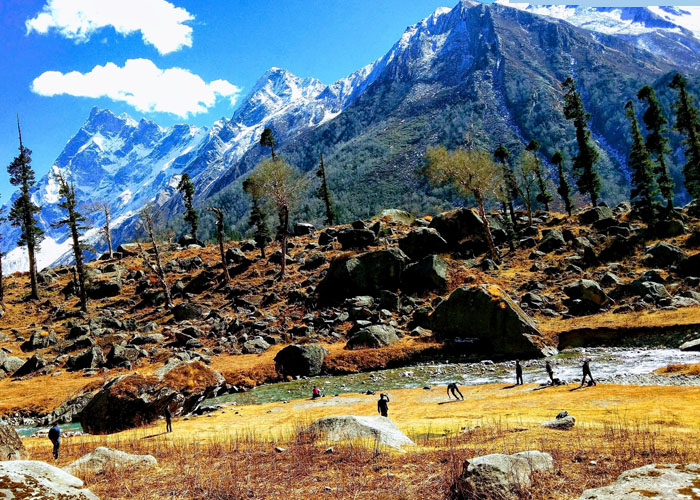

Har Ki Dun, known as the "Valley of Gods" and associated with the Mahabharata legend of the Pandavas route to heaven, is one of Uttarakhand's most scenic and culturally rich valley treks. Starting from the base village of Sankri, the trail gradually climbs through dense forests of pine, deodar, and rhododendron, alongside the Supin/Thamsa river, passing traditional wooden villages like Taluka, Seema/Osla, and vast meadows that open to panoramic views of peaks such as Swargarohini and Black Peak.
Over 6-7 days, you cover roughly 45-50 km with a highest altitude of about 11,675 ft, making Har Ki Dun an excellent choice for fit first‑timers as well as experienced trekkers seeking a non‑technical but immersive Himalayan journey. Spring and early summer (April-June) bring blooming flowers and clear mountain views, while autumn (October-mid‑November) offers crisp air, golden forests, and snow‑dusted peaks. Well-organized trek setups typically include tented or basic guesthouse stays, all meals on the trek, qualified trek leaders, safety gear, and porter/mule support for common equipment, ensuring comfort and safety even in this remote valley.
This Har Ki Dun package is designed on the popular Dehradun–Sankri–Har Ki Dun–Sankri circuit, giving time for gradual acclimatisation, exploration of local village culture, and relaxed camping under starry skies in one of the most beautiful valleys of the Garhwal Himalayas.
Early morning pickup from Dehradun to Sankri, covering about 190-200 km in 8-10 hours through Mussoorie/ Purola, Naugaon, and Mori along the Tons river.
Reach Sankri (around approx 6,500 feet), the base village for Har Ki Dun, and check into a guesthouse or campsite.
Check into a guesthouse or homestay, attend trek briefing, gear check, and safety instructions.
Evening walk around Sankri village, enjoy mountain views, and a hot dinner before resting.
After breakfast, drive about an hour from Sankri to Taluka (road‑head), a small village by the Supin/Thamsa river.
Begin the trek towards Seema, gradually gaining height as the trail winds through mixed forests of willow, walnut, and chestnut, alongside the river.
Walk 5-6 hours, passing small settlements and farms, with plenty of chances to interact briefly with locals.
Arrive near Seema/Osla region (altitude around 8,202 to 8,530 feet), set up camp or stay in a basic guesthouse, and rest under a starlit sky.
Leave Seema after breakfast and continue up the valley towards Kalkati Dhar.
The trail opens into broader views, with long sections through meadows and forest patches, and increasingly close views of higher ridges and peaks.
Trek about 6-7 hours with a steady but manageable ascent, stopping at viewpoints for photos and breaks.
Reach the campsite around Kalkati Dhar (approx. 9842 ft), a beautiful meadow area ideal for sunset views and a quiet night in tents.
Start early for the highlight day of the trek. Follow the river and meadows upstream towards the Har Ki Dun valley.
After 4-5 hours of moderate trekking, reach Har Ki Dun (around 11,647 to 11,811 feet), surrounded by snow‑clad peaks including the Swargarohini massif. Spend time exploring the valley and viewpoints.
From here, continue further to the tranquil Maninda Tal (also called Maninda Lake), a beautiful high‑altitude lake ringed by mountains, and enjoy the reflections and wide panoramas.
After soaking in the views and taking pictures, retrace your steps back to Kalkati Dhar by late afternoon/evening for dinner and overnight camping.
Begin your descent from Kalkati Dhar back towards Seema after breakfast.
Walk 5-6 hours mostly downhill, with time to notice valley views and details that might have been missed on the ascent.
Reach Seema by afternoon, settle into camp or guesthouse, and enjoy a relaxed evening in and around the village, sharing experiences with fellow trekkers.
Trek back from Seema to Taluka along the familiar riverside trail, taking about 4-5 hours at an easy pace.
On arrival at Taluka, rest briefly before boarding jeeps for the scenic 1‑hour drive back to Sankri.
Check into your guesthouse in Sankri, enjoy a hot meal, and celebrate the successful completion of the Har Ki Dun trek with the group.
After breakfast at Sankri, depart by road for Dehradun, following the same mountain route along the Tons River and pine forests.
Reach Dehradun by evening, where the trip ends, with memories of the Har Ki Dun valley, Maninda Tal, and the villages of the Supin valley.
Accommodation: 4 nights of tented accommodation during the trek on a triple‑sharing basis.
Food: Pure vegetarian meals four times a day, starting from dinner at the base camp on Day 1, till breakfast on the last day.
Forest charges: All necessary forest entry fees and permits for the trek route.
Other charges: Vehicle permits, toll taxes, and parking charges as per the itinerary.
Trek leader and guide: Qualified and experienced trek leader and local guide throughout the trek.
Transportation: Shared transport from Dehradun to the base camp and back to Dehradun as per the itinerary.
All types of personal expenses (shopping, tips, extra snacks, etc.).
Anything not specifically mentioned in the inclusions section.
Meals during the road journey on the first and last day (food is provided from dinner at base camp on Day 1 till lunch on the last day).
Mule or porter charges for carrying personal luggage.
Any emergency evacuation, medical or rescue expenses.
Additional fees or permits are applicable to non‑Indian nationals.
Packing smart makes the Har Ki Dun trek more comfortable and safer. Here is a concise essentials list:
Backpack: Strong rucksack (40-50 L) with good shoulder and hip support for all your gear.
Trekking shoes: High‑ankle, non‑slip trekking shoes with solid grip and waterproofing, if possible.
Warm clothing: Thermal inner layers, fleece, padded/down jacket, woollen cap, gloves, and multiple pairs of warm socks for cold evenings and nights.
Rain protection: Lightweight raincoat or poncho and backpack rain cover to handle sudden showers and wind.
Sun protection: UV‑blocking sunglasses, high-SPF sunscreen, lip balm, and a sun cap/hat.
Light source: Headlamp or torch with spare batteries, as camps and trails can be dark after sunset.
Water & hydration: 2 reusable bottles (total 2 L) or a hydration bladder; keep refilling at safe water points.
Basic first‑aid: Personal medicines plus band‑aids, crepe bandage, pain relief spray, antiseptic, and tablets for common issues (after doctor’s advice).
Trekking poles: One or two poles to improve balance and reduce impact on knees, especially on descents.
Miscellaneous: Power bank, small towel, quick‑dry clothes, pocket knife (where allowed), a few zip‑lock bags, and light snacks like dry fruits or energy bars.
Keep your backpack as light as possible-carry only what you truly need so that long walking days remain comfortable.
For this Har Ki Dun trek, we provide pick‑up and drop‑off from Dehradun, so you only need to reach Dehradun on your own.
Reach Dehradun by Air:
Fly to Jolly Grant Airport (Dehradun). From the airport, you can take a local taxi to your Dehradun reporting point.
Reach Dehradun by Train:
Arrive at Dehradun Railway Station, which is well-connected to major Indian cities. Our designated pickup point will be close to the station area.
Reach Dehradun by Road:
Dehradun is accessible by overnight/state buses and private vehicles from Delhi, Chandigarh, Rishikesh, and other nearby cities. Once in Dehradun, join our fixed‑time pickup for the shared transfer to Sankri and the same route back after the trek.
Triptoocean uses a simple, voucher‑based cancellation policy for the Har Ki Dun trek to balance fixed trek costs and flexibility for trekkers.
All cancellations must be shared in writing (email/WhatsApp text).
The effective cancellation date is the date Triptoocean receives your written request.
Slab‑wise policy
21 days or more before the trek start date
90% of the trek fee is issued as a Triptoocean trek voucher (10% is retained towards GST and transaction/admin charges).
15-20 days before the trek start date
70% of the trek fee is issued as a Triptoocean trek voucher (30% is retained towards GST, transactions, base‑stay booking, ration, and other preparatory costs).
7-14 days before the trek start date
50% of the trek fee is issued as a Triptoocean trek voucher (50% is retained towards GST, logistics, permits, equipment allocation, trek staff costs, etc.).
1-6 days before the trek start date, or no‑show
100% cancellation; no refund or voucher is applicable as all trek arrangements are already in place and paid for.
Trek Voucher Terms - Triptoocean
Trek vouchers are valid for 12 months from the date of issue.
Vouchers can be used against any available Triptoocean trek or package, including Har Ki Dun and other Himalayan treks, subject to current prices and seat availability.
Vouchers are non‑encashable and can be applied only to trip costs charged directly by TripToocean (not to third‑party add‑ons such as flights, insurance, etc.).
Har Ki Dun is generally rated easy to moderate, with a total trekking distance of about 45-50 km over 6-7 days. The trail has gradual ascents and descents with some steeper sections, making it suitable for fit beginners as well as experienced trekkers who want a relatively non‑technical Himalayan trek.
The best time is from April to mid-June (spring-early summer) and October to mid-November (autumn). Spring offers blooming forests and moderate temperatures, while autumn brings clearer skies, colourful foliage, and crisper mountain views. Peak winter and monsoon are generally avoided due to snow or heavy rainfall.
You should be able to comfortably walk 8-10 km in a day with a small backpack and handle multiple consecutive days of trekking. A month of preparation with regular walks/jogs, stair climbing, and basic leg/ core strengthening is recommended to enjoy the trek without excessive fatigue.
The highest point on most Har Ki Dun itineraries is around 11,675 ft (approx. 3,550-3,600 m). Daytime temperatures in trekking seasons can range from about 10-15°C, while nights may drop close to or below freezing (0 to - 5°C or lower at higher camps), so adequate warm layers and good quality winter gear are essential.
Mobile network is usually available intermittently up to Sankri and may be very limited or absent on most of the trail and at higher camps. Charging points, if available, are generally only at base village guesthouses; expect no charging options at higher camps and carry power banks.
Yes, it can be arranged for porter or mule support for personal luggage on a chargeable basis, while common camping and kitchen equipment is already handled by the trek team. Trekkers are usually encouraged to carry their own daypack with essentials like water, warm layer, rainwear, and snacks.