
The Nag Tibba Trek is what most trekkers from Delhi and Dehradun do first. Not because it is the only option, but because it is genuinely good - a proper Himalayan summit, a proper forest trail, and a proper view at the top - all packed into two days. You drive up Saturday, sleep in the mountains, summit Sunday morning, and are back in Dehradun by late afternoon. That is a weekend well spent.
The trek starts from Pantwari village in Tehri Garhwal district - about 85 km from Dehradun, a 3-4 hour drive through the Garhwal hills. From Pantwari, the trail climbs through dense oak, deodar, and rhododendron forest before opening up to meadows and ridge walking. The summit of Nag Tibba at 9,915 ft (3,022m) sits at the top of the Garhwal Himalayas' lower range, and the panorama up there is not subtle. Bandarpoonch, Swargarohini, Srikanth, and the Gangotri range all sit within eyeshot. On a clear day you can also pick out the Dhauladhar range across in Himachal Pradesh.
The name Nag Tibba translates roughly as Serpent's Peak. There is a small temple at the summit dedicated to Nag Devta - the local snake deity - which locals visit regularly. The trail passes through several small Garhwali villages and the forest is thick enough that you will hear birds the entire way up. The Himalayan monal, Uttarakhand's state bird, is a regular sighting in the deodar sections.
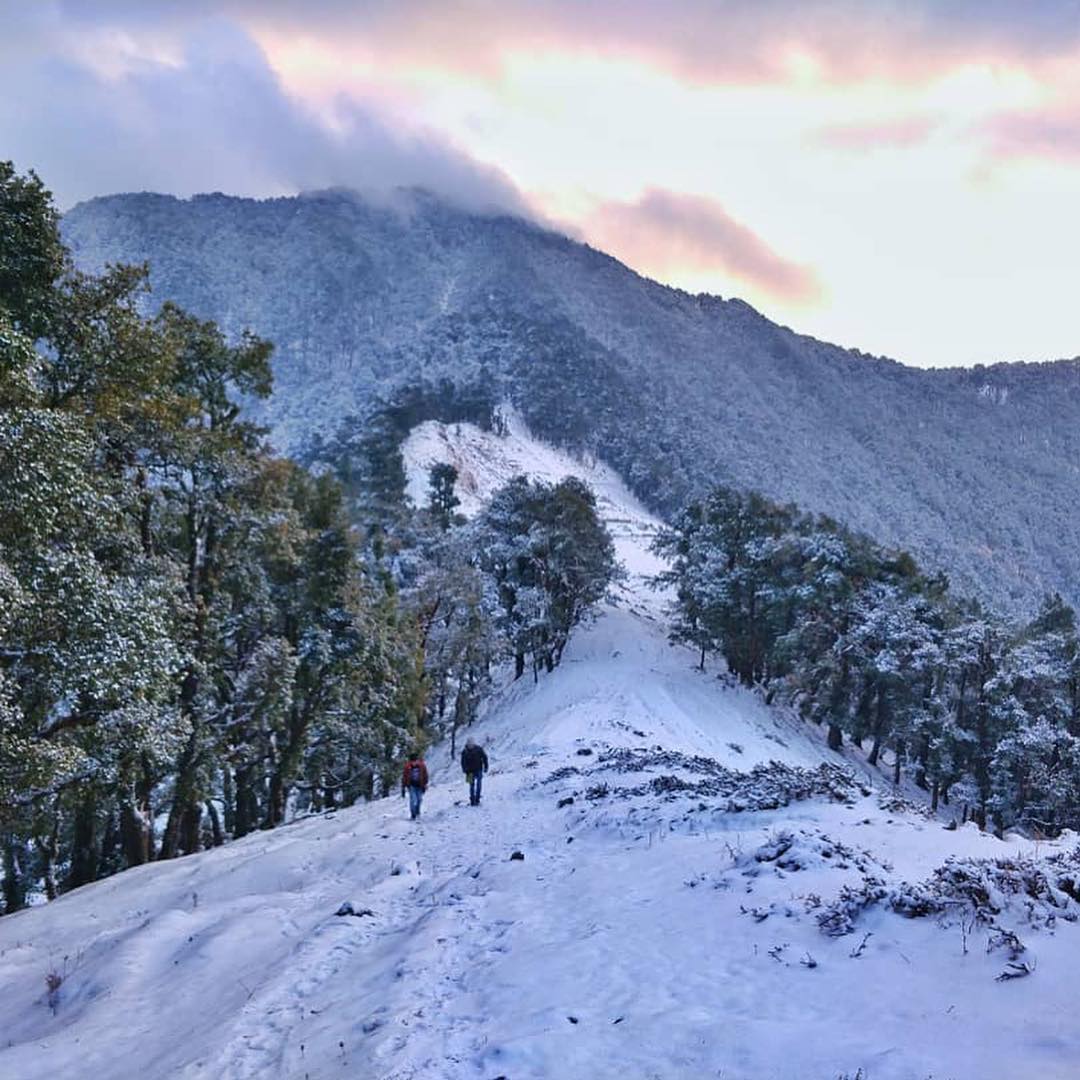
TripToOcean runs this trek year-round - snow on the trail from November through March, rhododendrons flowering in April, pleasant green forests through the summer. The winter version of this trek is particularly popular, with the trail under 6–8 inches of snow and the summit view sharpened by cold, dry air. Whatever month you come, the total distance is around 16 km return and the trek can be done by any healthy adult with no prior trekking experience. It is the right trek to start with.
Meet the TripToOcean group at Dehradun Railway Station (exact pickup point confirmed at booking) at approximately 7:00-7:30 AM. The drive to Pantwari village takes 3-4 hours via Mussoorie road, Kempty Falls junction, and the narrowing mountain roads beyond. The drive itself is pleasant - the Yamuna valley opens below Mussoorie and the scenery changes noticeably every 15 km.
Pantwari is a small Garhwali village at around 1,600m with a handful of guesthouses, small shops, and the easy friendliness of a place that sees trekkers every weekend but is not yet overrun by them. Check your pack, lace up, and begin the trek by early afternoon.
The trail from Pantwari climbs steadily through mixed oak and rhododendron forest. The forest is genuinely dense here - you can be an hour in and still not see sky through the canopy. The gradient is consistent but manageable. There are a few stream crossings (simple rock-hop affairs) and the trail is well-defined throughout. In April the rhododendron bloom turns the hillside red and pink. In December the snow starts at around 2,000m.
Arrive at Nag Tibba Base Camp by late afternoon. Tents are already set up. Hot tea, rest, dinner, and an early night. The summit push starts before dawn tomorrow.
Overnight: Tent camp at Nag Tibba Base Camp | Meals: Dinner | Trek: ~7 km, 4-5 hrs (2,290m / 7,513 ft)
Wake up at approximately 5:30 AM. The pre-dawn start is worth it - the summit at sunrise, when Bandarpoonch and the Gangotri peaks are catching the first orange light, is a different experience from arriving at noon when the haze has built up. The climb from base camp to the summit takes 1.5-2 hours on a clear trail through increasingly open terrain.
The summit of Nag Tibba (9,915 ft) is a broad, open ridge rather than a sharp peak, which means the panorama opens in all directions simultaneously. There is a small shrine to Nag Devta here - prayer flags, a handful of offerings, the sound of wind. Spend as long as you like. The descent back to base camp is quick.
Back at camp for breakfast. Pack up tents and begin the descent to Pantwari - the same trail in reverse, which looks completely different heading down. You will reach Pantwari by mid-morning to noon.
An optional 20-minute detour on the way back passes through Kempty Falls if the group wants to stop. The drive returns to Dehradun by late afternoon, typically 4-6 PM depending on traffic through Mussoorie.
Meals: Breakfast | Trek: ~9 km (summit + descent to Pantwari)
From Delhi: Delhi to Dehradun is approximately 250-300 km by road (5-6 hours) or 5-5.5 hours by train (Shatabdi Express from New Delhi to Dehradun is the most convenient option). From Dehradun, TripToOcean's group vehicle departs for Pantwari the following morning. Overnight train from Delhi, arrive Dehradun early, join the morning departure.
From Dehradun: Pantwari is 85 km from Dehradun via the Mussoorie-Kempty road. By shared vehicle it takes 3-4 hours. TripToOcean arranges the group vehicle from a fixed Dehradun pickup point - exact location confirmed at booking. The Mussoorie route passes Kempty Falls, which you may see again on the return.
From Mussoorie: Pantwari is approximately 46 km from Mussoorie - about 1.5-2 hours by road. If you are staying in Mussoorie, TripToOcean can arrange a Mussoorie pickup point for an additional ₹300-500 per person.
Nearest Railway Station: Dehradun Railway Station. The Shatabdi Express from New Delhi is the fastest option; book 2-4 weeks ahead on weekends.
Nearest Airport: Jolly Grant Airport, Dehradun (DED) - 25 km from Dehradun city. Flights from Delhi (45 min), Mumbai, and Bangalore. Well-connected year-round.
Included in Your Package:
All meals - Day 1 dinner through Day 2 breakfast (hot meals at camp)
High-altitude tent camping at Nag Tibba Base Camp (1 night, triple-sharing basis)
Sleeping mat (personal sleeping bag not provided - see Exclusions)
Government-licensed, experienced local trek guide
Uttarakhand Forest Department entry permits
Group vehicle transfer: Dehradun → Pantwari → Dehradun
Basic first aid kit carried on trail
Trek completion certificate from TripToOcean
Not Included:
Travel to / from Dehradun (Delhi-Dehradun train or flight)
Personal sleeping bag - bring your own or rent in Dehradun (rated -5°C for winter treks)
Personal trekking gear - boots, jacket, gloves, thermals (winter months)
Travel insurance
Personal expenses - snacks, hot drinks beyond meals, shopping
Kempty Falls entry fee (₹30-50) if you stop on the way back
Porter for personal luggage (available on request at ₹800-1,000 per day)
GST (5%) on package cost
✅ Who Can Do the Nag Tibba Trek?
Any healthy adult with no prior trekking experience. This is genuinely the right starting point.
Children aged 8 and above with a parent or guardian - the trail is manageable and not technically demanding.
Older adults with good baseline fitness - the gradient is steady but never severe.
The only people who should think twice: those with significant knee problems (the descent is 9 km) or active respiratory conditions at altitude.
Altitude: Nag Tibba's summit is at 9,915 ft. This is low enough that Acute Mountain Sickness is unlikely for most people with no prior altitude issues. You may feel mildly breathless on steep sections - that is normal. If you develop a persistent headache combined with nausea, tell your guide and slow down. Staying well hydrated throughout is the most useful thing you can do.
Weather in Winter (Nov-March): The biggest variable on the Nag Tibba Trek in winter is temperature, not terrain. Daytime on the trail is usually 5°C-12°C; nights at base camp drop to -5°C or lower in December-January. A proper sleeping bag and layered clothing are not optional in winter. If you do not have a sleeping bag, rent one in Dehradun - warm bags cost ₹200-350/day and are available at all trekking gear shops near the station.
Footwear: This comes up more than any other gear question. Ankle-supporting waterproof trekking boots make the descent noticeably safer and more comfortable, particularly in wet or snowy conditions. Trail runners are acceptable in summer; in winter with snow on the trail, waterproof boots are worth the investment or rental.
Physical Preparation: No specific training is required if you are generally active. If you are sedentary, 2-3 weeks of daily 45-minute walks before the trek will make a meaningful difference on the descent. The uphill is 7 km; the full return is 9 km. Your knees take more load coming down than going up - most people discover this on their first long descent.
Rain: July and August see the most rainfall. The trail becomes slippery in places and visibility is limited, but the trek is doable. The forest looks its best in the monsoon - deep green, mist in the canopy, fresh waterfalls on every slope. TripToOcean does run monsoon batches; come prepared with a waterproof poncho and expect wet boots.
This is a 2-day trek with 1 night at camp. Pack light - a 20-25L day pack is enough. You do not need a porter duffel unless you are renting bulky gear in Dehradun.
Clothing
Moisture-wicking base layer top × 2
Fleece or light down jacket
Waterproof windcheater / rain jacket
Trekking pants × 2 (quick-dry)
Warm beanie + sun hat + buff
Light gloves (winter: insulated gloves)
Trekking socks × 3 pairs (wool preferred)
Thermal base layer (Nov-March mandatory)
Footwear
Waterproof ankle-support trekking boots (recommended year-round)
Trail runners (summer only - May to September)
Lightweight sandals or crocs (camp evenings)
Gaiters (optional - useful in winter snow)
Equipment
Day pack 20-25L + rain cover
Personal sleeping bag (-5°C rated) - not provided
Trekking poles (optional but knee-helpful on descent)
Headlamp + spare batteries (for pre-dawn summit start)
Power bank × 1 (no charging at camp)
Sunglasses + SPF 50 sunscreen + lip balm
Insulated water bottle × 2 (1L each)
Health & Documents
Personal first aid: ibuprofen, blister pads, antiseptic
ORS sachets (hydration support on trail)
Personal medications + extras
Aadhar / Voter ID / Passport (for forest permit)
Cash ₹500-₹1,000 small notes (no ATM at Pantwari)
Snacks: energy bars, dry fruits, nuts (personal supply)
Sleeping bag rental: ₹200-350/day in Dehradun near the railway station area. Trekking poles available for rent at ₹100-200/day. TripToOcean sends a detailed packing list after booking confirmation.
Cancellation:
21+ days before departure: 10% deduction; 90% as Trek Credit valid 12 months
15-20 days before departure: 30% deduction; 70% Trek Credit valid 12 months
7-14 days before departure: 50% deduction; 50% Trek Credit valid 12 months
1-6 days before departure: 100% forfeiture
No-show / after departure: No refund
Trek cancelled by TripToOcean (weather / trail blockage / force majeure):
Full refund OR free rescheduling to the next available batch - your choice
Rescheduling (to another weekend):
7+ days before: ₹500 rescheduling fee per person
Within 7 days: treated as cancellation; new booking required
📋 Read Before You Confirm
Carry a valid government ID (Aadhaar, Voter ID, or Passport) - required for the forest permit. Children need a school ID card or birth certificate in hard copy.
A personal sleeping bag is not provided. In winter months (November-March), a bag rated to -5°C or lower is mandatory. Camp temperatures at Nag Tibba Base drop to -5°C and below in January. Renting a bag in Dehradun the day before is perfectly fine; just confirm the temperature rating.
The mobile network is weak to nonexistent from Pantwari onward. Inform your contacts of the itinerary before leaving Dehradun. You will be back in range on Day 2 afternoon.
The trail passes through a Garhwali village and the forest is home to wildlife. Do not litter on the trail. Noise discipline near the forest edges is good practice and increases the chance of monal sightings.
Kempty Falls stop on the return is optional and adds 30-40 minutes to the drive. Confirm with your guide if the group wants to stop.
This trek runs in monsoon (July-August). Expect a wet trail, excellent greenery, and reduced summit visibility. If you are coming specifically for the views, October-November or March are better months.
| Item | Details |
| Trek Duration | 2 Days / 1 Night |
| Total Distance | ~16 km round trip (Pantwari to summit and back) |
| Summit Altitude | 3,022m / 9,915 ft (Nag Tibba Peak) |
| Start / End Point | Pantwari Village, Tehri Garhwal, Uttarakhand |
| Base Town (transfers) | Dehradun (85 km from Pantwari) |
| Trek Season | Year-round - snow Nov-March; flowers April-May; clear skies Oct-Nov |
| Difficulty | Easy to Moderate (best first Himalayan trek) |
| Accommodation | Tent camping at Nag Tibba Base Camp (1 night) |
| Meals | Day 1 dinner through Day 2 breakfast |
| Guide | Licensed, experienced local guide |
| Permits | Uttarakhand Forest Dept. entry permit (included) |
| Starting Rate | ₹2,499 per person + 5% GST (shared group) |
| Also Possible | 1-day trek option (no camping) - contact TripToOcean |
| Wildlife | Himalayan monal, Koklass pheasant, barking deer, langur |
Yes - this is one of the most recommended first treks in India for exactly this reason. The total distance is 16 km return over 2 days, the maximum altitude is 9,915 ft (well within range for most healthy people without prior altitude experience), and the trail is well-marked throughout. The one thing that surprises first-timers is the descent - 9 km downhill works the knees harder than most people expect. Trekking poles help significantly if you have them, and walking with bent knees rather than locking them out is the single most useful technique.
October-November is the single best window - clear skies, the cleanest summit views of the year, pleasant temperatures on the trail, and no snow-related complications. March-May is also excellent: the rhododendrons bloom from late March, the trail is green, and temperatures are comfortable. December-February gives you a snow trail and some of the most dramatic winter mountain views, but you need proper cold-weather gear. July-August is the monsoon - expect rain, slippery trail sections, and reduced visibility, but the forest looks extraordinary. Any month works if you pack for it.
Budget ₹5,000-₹7,000 per person all-in from Delhi for the shared group option. Breakdown: ₹2,499 TripToOcean package + ₹125 GST (5%) + ₹500-₹1,000 Delhi-Dehradun-Delhi train or bus + ₹500-₹1,500 personal spending (snacks, gear rental, Kempty Falls). Book your Delhi-Dehradun train 2-3 weeks ahead on weekends, as Shatabdi seats sell out. Nag Tibba is one of the least expensive genuine Himalayan trekking experiences available from Delhi.
Yes, it is possible. The full 16 km round trip takes 7-9 hours of walking, so starting by 7:00 AM from Pantwari and summiting by late morning allows a return to Pantwari by 2–3 PM and back to Dehradun by evening. The 1-day format means you miss the overnight mountain experience and the pre-dawn summit start - but it does work for people with tight schedules. TripToOcean can arrange a 1-day private option from ₹1,800 per person. Contact us to organise the transport timing for an early departure from Dehradun.
On a clear day - which October, November, and December generally deliver - you can see Bandarpoonch (6,316m), Swargarohini (6,252m), Srikanth (6,133m), the Gangotri group in Uttarkashi, and the Dhauladhar range across in Himachal Pradesh. On exceptional winter days, Kedarnath Peak is also visible. The panorama is particularly good because Nag Tibba sits at a point where the Garhwal Himalaya curves, giving a wider east-west sweep than most peaks of similar height. Pre-dawn summit reaches catch the ranges at their most dramatic - the peaks glow gold while the valleys are still dark below.
Easy to Moderate. The ascent covers 7 km with a total elevation gain of roughly 1,400m from Pantwari to summit - that is a steady climb but with no technical sections, no scrambling, no fixed ropes, and no altitude-related complications at this height. The trail is clear throughout. The moderate element is the descent: 9 km downhill on Day 2 is harder on the knees than most first-timers expect. Anyone who walks regularly and is in reasonable health can complete this trek. The Nag Tibba trek difficulty level is noticeably lower than Kedarkantha or Brahmatal and well below any high-pass trek.
Yes - Nag Tibba is one of the few genuine Himalayan treks that is realistic for children. Kids aged 8 and above with reasonable fitness can manage the trail with an adult. The forest sections are interesting for children - birds, streams, rhododendron flowers, the occasional monkey in the canopy. The overnight camping element usually goes down very well. The one consideration for families: a 9 km descent on Day 2 is genuinely tiring for small legs. Trekking poles for children (available to rent in Dehradun) help significantly. TripToOcean's child rate for shared group batches is ₹2,000 per person.
Nag means serpent and Tibba means peak - Serpent's Peak. The name comes from the small temple at the summit dedicated to Nag Devta, the snake deity worshipped across the Garhwal hills. Snakes are associated with rain and fertility in Garhwali tradition, and the summit shrine is a genuine local place of worship, not a tourist installation. You will often see prayer flags, small offerings, and occasionally local villagers who have walked up to leave offerings. The religious significance of the site is one reason the trail has been maintained well for generations before trekking tourism discovered it.
Different situations call for different treks. Nag Tibba is 2 days and significantly cheaper - the right choice if you want a Himalayan weekend, have no prior experience, are on a tighter budget, or are taking children or first-time trekkers. Kedarkantha is 6 days, hits 12,500 ft, and involves a more committed summit climb through deeper snow - the right choice if you have done a shorter trek, want a longer experience, or specifically want a winter snow summit with a sharper climb. If you have not done either, do Nag Tibba first. Come back and do Kedarkantha after.