
Best Places for Scuba Diving in India 2026 - The Complete Guide
Priya Sharma
Travel Writer & Adventure Enthusiast
India has 7,517 km of coastline touching three bodies of water - the Arabian Sea, the Bay of Bengal, and the Laccadive Sea. That's a lot of ocean. And while Thailand and the Maldives get most of the international diving attention, the truth is that India has world-class dive sites sitting largely undiscovered, uncrowded, and in many cases, significantly cheaper than anywhere in Southeast Asia.
The problem isn't the diving. It's that most people don't know the diving exists.
This guide covers every major scuba diving destination in India worth knowing about in 2026 - what the water is actually like, what you'll see, what it costs, when to go, and what you need to know before you get in the water.
Before You Dive - Rules, Certifications & Safety
Most Indians planning a first dive don't realize there are different categories of diving experience, and that the requirements vary. Here's the honest breakdown:
Discovery Scuba Diving (DSD / Try Dive): No certification needed. You dive to a maximum of 12 meters under direct instructor supervision. This is what most tourists do on their first dive in Goa, Andaman, or Pondicherry. Takes about half a day including briefing.
PADI Open Water Diver certification: The entry-level full certification. Takes 3-4 days, includes pool/confined water sessions and four open water dives. Once certified, you can dive independently to 18 meters anywhere in the world. Cost in India: ₹20,000-₹35,000 depending on location and operator.
PADI Advanced Open Water: Expands your limit to 30 meters. Requires 5 dives over 2-3 days. Good idea if you want to explore wrecks or do deep dives.
Who can dive? Minimum age for DSD and Open Water is 10 years (Junior Open Water with depth restrictions). Adults must complete a medical questionnaire. Those with heart or lung conditions, epilepsy, or recent surgery need a doctor's clearance before diving.
The golden rules of scuba diving
these aren't just guidelines, they're what keeps you safe:
- Never hold your breath underwater (most critical rule in diving)
- Never dive alone - always use the buddy system
- Check your equipment (BCD, regulator, tank) before every dive
- Ascend slowly - no faster than 18 meters per minute; always do a 3-minute safety stop at 5 meters
- Don't dive within 12-18 hours of a flight (risk of decompression sickness)
- Never touch coral or disturb marine life - it's both ecologically damaging and illegal in many protected areas
- Listen to your instructor. They know the site; you don't
Certifications to look for in operators: PADI (Professional Association of Diving Instructors), SSI (Scuba Schools International), and NAUI are the three main internationally recognized agencies in India. All are regulated by the World Recreational Scuba Training Council (WRSTC) and ISO standards. Any certification from these bodies is valid for life and recognized worldwide.
Lakshadweep special note: Diving in Lakshadweep requires an entry permit for Indian nationals and is more tightly controlled. Foreign nationals face additional restrictions. Plan well in advance and go through a registered tour operator.
1. Andaman Islands (Havelock / Swaraj Dweep) - India's Best Overall Dive Destination
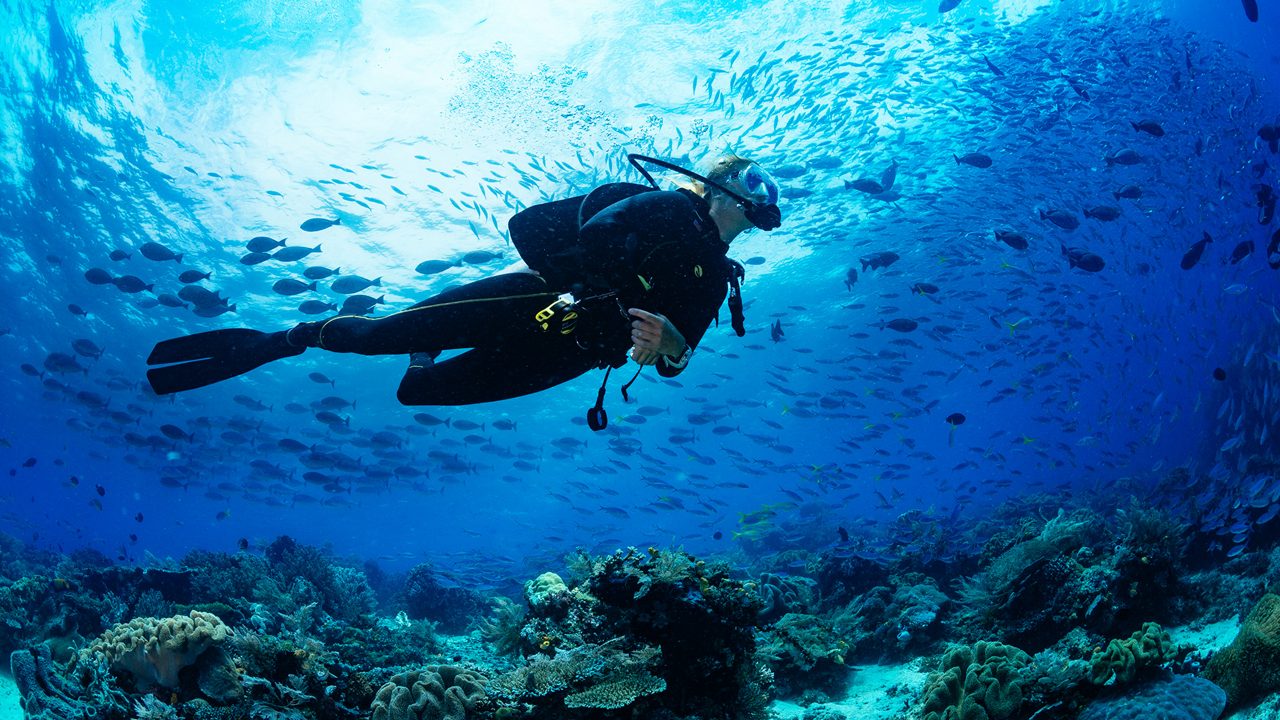
If you only ever dive once in India, Havelock Island (now officially renamed Swaraj Dweep) is where you do it. The coral reefs here are some of the healthiest in the entire Indian Ocean, with over 500 documented marine species. Visibility regularly hits 15-25 meters, peaking at 20-25 meters between February and April. The water is warm, clear, and genuinely extraordinary.
Key dive sites include The Wall (dramatic drop-off with sea fans and schooling fish), Aquarium (named for obvious reasons - reef fish in every direction), Nemo Reef (clownfish, anemones, shallow and beginner-friendly), Jackson's Bar, and Minerva Ledge. Further afield, Barren Island offers the only active volcano dive in South Asia - dark volcanic rock, bright coral, and the surreal sight of smoke on the surface.
Neil Island (Shaheed Dweep) is quieter than Havelock and good for beginners, with sites like Margherita's Mischief and the Jetty area.
Trusted operators: Triptoocean, Dive India (first PADI 5-Star Resort in India), Barefoot Scuba, Andaman Bubbles, ScubaLuv.
Cost: Discovery dive ₹4,500-₹6,500. PADI Open Water certification ₹25,000-₹35,000. Best time: October to May.
Peak visibility: February to April. Getting there: Fly Port Blair from Chennai, Kolkata, Bangalore, or Delhi (₹8,000-₹15,000 return). Take ferry to Havelock (2-2.5 hours).
Best for: All levels. Most dive variety in India.
2. Netrani Island (Pigeon Island), Karnataka - Best Value Dive in India
Netrani is a heart-shaped uninhabited island 19 km off the coast of Honavara in Karnataka, and it's arguably the best-value dive experience in the country. Visibility here reaches up to 30 meters on good days - better than most Andaman dive spots - and the marine life is remarkable: blacktip reef sharks, whale sharks (seasonal), manta rays, giant trevally, barracuda schools, sea turtles, moray eels, and dense reef fish populations.
The island has no human settlement and no pollution source. You get on a boat, motor out, and dive in water that's been largely left alone. That's a rarer thing than it sounds.
The first PADI-certified dive center here was Netrani Adventures, established in 2009, which has since completed over 65,000 dives. Several Bangalore-based operators now run weekend trip packages (overnight bus + homestay + PADI-certified dive + meals) for around ₹7,500 all-inclusive.
Cost: Discovery dive ₹4,000–₹6,000. Best time: October to May.
Peak visibility: December to March. Getting there: Honavara is 400 km from Bangalore (7-8 hours by road or overnight bus). Boat to Netrani takes 1 hour.
Best for: Value seekers, experienced divers, shark and manta ray enthusiasts. Note: Check current operator status before booking - access periodically changes.
3. Goa - Best for First-Timers and Casual Divers
Goa isn't India's best dive destination by any technical measure. Visibility runs 5–15 meters depending on season, which is lower than Netrani or Andaman. But it is the most accessible, most convenient, and most forgiving place to try diving for the first time - and that matters.
Diving in Goa happens around Grande Island off the south coast. The island has decent coral formations, good fish life, and the SS Rita shipwreck (a popular dive for intermediate divers). If you're already in Goa for a holiday and curious about diving, it makes complete sense to do a discovery dive here rather than planning a separate trip.
Key dive sites: Grande Island, Davy Jones Locker, Suzy's Wreck, Turbo Tunnel, Shelter Cove, Sail Rock. Trusted operators: Goa Diving, Barracuda Dive Center, Scuba Evolution, Flying Fish Diving.
Cost: Discovery dive ₹2,500-₹5,500. Full day trip with 2 dives: ₹4,000-₹7,000.
Best time: October to May. Visibility is worst in monsoon. Water temperature: Consistent 28°C.
Best for: First-timers, holiday divers, those who want diving without a dedicated trip.
4. Pondicherry (Puducherry) - Best for Unique and Structured Diving
Pondicherry is the only major dive destination on India's east coast, and it offers something no other site in India does: artificial reefs built from bamboo, temple ruins, and purpose-built reef balls that marine life has colonized over decades. The Temple Reef and Aravind's Wall are the two signature sites. Whale sharks occasionally appear at deeper offshore sites, making it one of very few places in India where an experienced diver might encounter one.
The dive setup in Pondicherry is also notably professional. Operators like Samudra Adventures and Temple Adventures (the latter is government-authorized) run structured programs from DSD right through to technical diving. The dive masters here tend to be more thorough in their briefings than at some busier tourist-facing sites.
Key dive sites: Temple Reef, Aravind's Wall, Cool Shark Reef, 4 Corners, The Hole, Ravines.
Best time: February to April, September to November.
Cost: ₹3,500-₹5,000 for a discovery dive.
Best for: Those wanting something different, beginner certification, whale shark encounters.
5. Lakshadweep Islands - Best for Pristine, Untouched Diving
Lakshadweep is what India's diving could become if it all developed this way. The 36 coral atolls have visibility that regularly exceeds 30 meters - among the clearest water in the Indian Ocean. Manta rays cruise the channels between islands. The coral coverage is extensive and largely undamaged. It genuinely competes with the Maldives for underwater scenery.
The catch is access. Getting permits and arranging accommodation in Lakshadweep requires planning well in advance through registered operators. Foreign nationals face additional restrictions. Bangaram and Kadmat Islands are the two main dive destinations open to visitors.
Key dive sites (Kadmat): The Wall, North Cave, Turtle City, Double Reef, Jack Point, Shark Alley. Key dive sites (Bangaram): Dolphin Reef, Princess Royal, Lost Paradise, Manta Point, Fish Soup.
Best time: December to April.
Cost: ₹5,000-₹8,000 per dive. Getting there (flight from Kochi to Agatti) adds ₹6,000-₹12,000 return.
Best for: Experienced divers wanting world-class coral and visibility, serious underwater photographers.
6. Konkan Coast - Tarkarli, Malvan, Murdeshwar, Udupi
The Konkan coastline from Maharashtra down to Karnataka's northern shore has emerged as a genuine cluster of solid dive destinations - less famous than Andaman or Goa, but often better value and considerably quieter.
Tarkarli (Maharashtra): Clear coastal waters near Sindhudurg Fort, with rich marine life and good visibility by Indian standards.
Cost: ₹1,000-₹2,500. Best time: October to April.
Malvan: Right next to Tarkarli and often cheaper. Good for beginners. Sindhudurg Fort underwater walls are a unique add-on.
Cost: ₹2,500-₹4,000.
Murdeshwar / Honavara (Karnataka): Gateway to Netrani Island, with temple and statue of Shiva as a bonus. Some operators run Murdeshwar-based day trips to Netrani.
Cost: ₹4,000-₹6,000.
Udupi and Murudeshwar: Newer, quieter destinations. Good visibility, warm water, white-sand beaches. Still developing in terms of operator quality - check certifications carefully before booking.
7. Kovalam, Kerala - Best for a Calm, Add-On Dive
Kovalam near Thiruvananthapuram isn't a headline dive destination but it's a convenient and pleasant option for anyone traveling through Kerala who wants to tick scuba off their list. Bond Safari Kovalam, which uses underwater scooters in addition to conventional diving, has built a distinctive offering here. Marine life includes reef fish, moray eels, blue-fin trevally, silver moonfish, and occasional sea turtles. The water is steady and calm, making it genuinely good for nervous first-timers.
Cost: ₹4,000-₹5,500.
Best time: October to March.
Best for: Kerala travelers, beginners, those wanting calm conditions.
Suggested Post :
People Also Ask
No certification is needed for a Discovery Scuba Dive (DSD), where you dive to a maximum of 12 meters under direct instructor supervision. This is what most tourists do on a first visit. For independent diving to 18 meters, you need a PADI Open Water or equivalent SSI/NAUI certification, which takes 3-4 days to complete.
Goa (Grande Island) for ease and accessibility. Havelock Island (Andaman) for the best all-round beginner experience. Pondicherry for the most structured training setup. Netrani for best value and marine life richness.
October to May covers most sites. Specific windows: Andaman February-April (peak visibility). Pondicherry: February-April and September-November. Goa: October-April. Lakshadweep: December-April. Netrani: December-March (best visibility). Avoid monsoon months (June-September) at most sites - rough seas reduce visibility significantly.
Discovery dives range from ₹1,000 (Tarkarli, budget operators) to ₹8,000 (Lakshadweep). Most well-run sites charge ₹3,500-₹6,500 for a discovery dive including equipment, instruction, and boat ride. PADI Open Water certification runs ₹20,000-₹35,000 depending on location.
Yes, at established, certified operators with qualified instructors. Always verify that your dive center is PADI, SSI, or NAUI certified. Never dive with an operator who cannot produce certification documents. Confirm that equipment is modern and maintained. The Andaman Islands have the most mature dive infrastructure; all recommended operators there have strong safety records.
For a Discovery Scuba Dive, basic water comfort is sufficient - you don't need to be a strong swimmer. For a PADI Open Water certification, you must be able to swim 200 meters continuously (no time limit) and float or tread water for 10 minutes. This is assessed by your instructor before the course begins.
10 years for Discover Scuba Diving and the PADI Open Water Diver course (Junior certification, with depth restrictions). 12 years for the Advanced Open Water course. 15 years for the standard, unrestricted Open Water certification. Adult supervision and parental consent are required for under-18s.
Yes. The medical questionnaire you'll complete before diving screens for conditions including heart or lung disease, epilepsy, asthma (active), recent surgery, ear conditions, and pregnancy. If any apply, you need a doctor's sign-off before diving. Don't skip this - pressure changes underwater can be genuinely dangerous for those with certain conditions.
Varies by location. Andaman: reef sharks, manta rays, sea turtles, octopus, moray eels, batfish, hundreds of reef fish species. Netrani: blacktip reef sharks, whale sharks (seasonal), manta rays, barracuda. Lakshadweep: reef sharks, manta rays, turtles, massive coral coverage. Pondicherry: whale sharks (occasional), jack fish, sea snakes, fan corals. Goa: reef fish, dolphins occasionally on boat ride out.
No - PADI certifications are valid for life. However, if you haven't dived in 6-12 months, a refresher course is strongly recommended. PADI's ReActivate program is the standard option, available eLearning and in-water.
Yes at most sites - Goa, Pondicherry, Andaman (with standard tourist visa), Netrani, Kovalam. Lakshadweep has additional permit requirements for foreign nationals. Some Andaman areas require Restricted Area Permits for foreign visitors, usually arranged by your operator.
Tarkarli and Malvan in Maharashtra offer the lowest prices (₹1,000-₹2,500 for a basic dive). Goa is next at ₹2,500-₹4,000. For the best combination of affordability and quality marine life, Netrani Island stands out - especially when booked as part of an all-inclusive weekend package from Bangalore.