
Best Tourist Places to Visit in Jaipur (Pink City) Rajasthan

Priya Sharma
Travel Writer & Adventure Enthusiast
1. Hawa Mahal
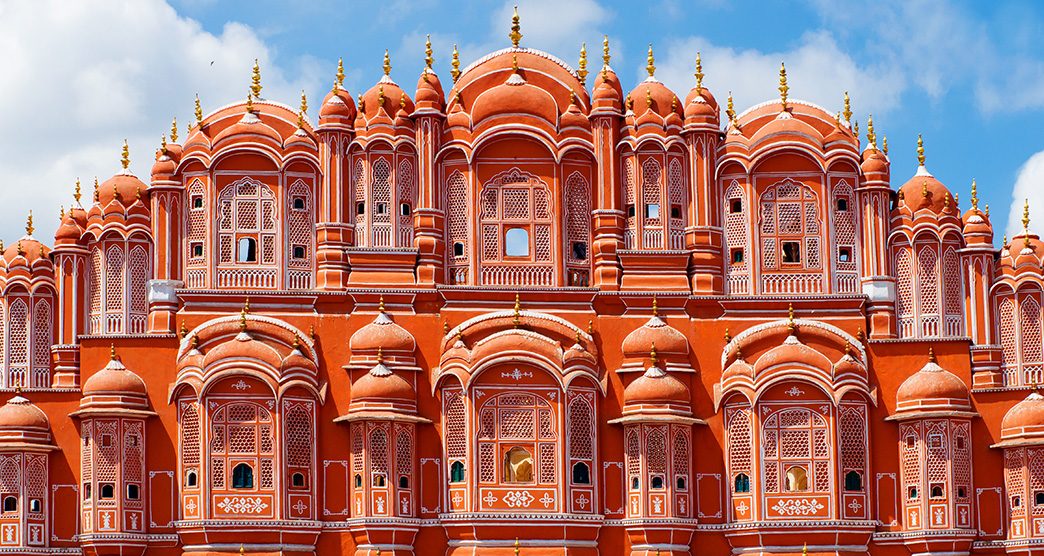
Hawa Mahal or the ”The Palace of Breeze" is located in the Badi Choupad area of the Pink City of Jaipur in Rajasthan, India. It is one of the most famous tourist attractions places in Jaipur.

The Hawa Mahal structure was built by Kachhwaha Rajput ruler Maharaja Sawai Pratap Singh in the year 1799, and it was designed by Lal Chand Ustad.
- The Khetri Mahalin Jhunjhunu, built by Bhopal Singh in the year 1770, is believed to be the inspiration behind the construction of the Hawa Mahal.
- During the earlier years, the royal ladies had to follow the "Purdah" system. Since the Hawa Mahal is located in the center of Jaipur city, it allowed the ladies the leisure to watch the everyday happenings of the city and other festivities through the 953 windows.
- These windows or “Jharokhas” as they are called, were decorated in criss-cross designs known as Latticework. These designs on the windows allowed the royal ladies the privacy from the public eye, at the same time, they could experience everyday life.
- One more interesting fact about the Hawa Mahal is that the view that we see from the outside is actually the backside of the structure.
Entry Fee - For Indian Tourists: INR 50 per Person, For Foreigners: INR 200 per Person
Timings - 9:00 AM - 4:30 PM IST
Locality - Badi Choupad, Jaipur
Establishment - 1799
Height - 50 Mtr
Architectural Style - Rajput architectural styles
2. City Palace
The City Palace, Jaipur, was built by Maharaj Sawai Jai Singh II. The construction of the same started simultaneously along with the construction of Jaipur city.

Jaipur city was constructed by Maharaj Sawai Jai Singh for administrative purposes after he decided to shift base from the Amber palace, which lies 11 Km from Jaipur city. The history of the City Palace Jaipur is as old as Jaipur.
- The City Palace has many gardens, courtyards, temples, and a Museum.
- It was built under the guidance of a Bengali Architect by the name of Vidyadhar Bhattacharya.
- The City Palace Jaipur has the world’s largest "Pure Silver Stirling Vessels". These vessels have a capacity to hold 4000 liters of water and are made by melting 14000 silver coins without soldering. These vessels were specially made for “ Maharaja Sawai Madho Singh II” to carry the water of the river Ganga to drink while on his trip to England to attend the coronation ceremony of Edward VII. Hence, these vessels came to be known as "Gangajalis".
- The silver vessels or Urns hold the “Guinness World Record” for being the largest silver vessels in the world.
Entry Fee
For Palace - For Indian Tourists: INR 200 per Person, For Students INR 100 ( School ID compulsory), For Foreigners INR 700 per person
For Museum - Indian Tourist INR 500/- Foreigners INR 1000/-
Timings - Monday to Friday 9:30 AM to 5:00 PM IST. Night tour 7:00 PM to 10:00 PM IST
Locality - Centre of Jaipur City
Establishment - 1727 (Construction commenced)
Architectural Style - Combination of Rajput, European, and Mughal architectural styles
Major Attractions - Govind Dev Ji Temple, Chandra Mahal, Mubarak Mahal, Clock Tower.
3. Amer Fort
Amer fort also known as Amber Fort, was built by Raja Alan Singh of the Chanda clan from Mairs in 967 CE. However, later the fort was taken over and expanded by the Kachwaha King Raja Kakil Dev in 1036; this structure, later on, was called the Jaigarh Fort.

The current-day Amer fort is majorly built, or rather expanded, by Raja Man Singh I, who also made it his capital. Amer fort remained the capital of the later rulers until 1727, when the capital was shifted from Amer to Jaipur for better administrative purposes.
- Sila Devi Temple: The Sila Devi, an incarnation of the goddess Durga, is located near the entrance of the palace. The Idol was retrieved from the sea by Maharaja Man Singh after the goddess came in his dream and instructed him to install her idol and worship it. The idol is carved out of a single stone, and therefore it is named Sila Devi.
- Sheesh Mahal/ Mirror Palace: The Sheesh Mahal was a part of the royal family’s private residence. The ceiling of the palace is embellished with exquisite mirrors that glitter like a box of jewels when a flickering candle is held underneath.
- Other Attractions: Diwan-e-Aam, Diwan-e-Khaas, Sukh Niwas
The elephant ride is also a major attraction. Tourists have to hire an elephant at the foothills of the fort, the elephants take you up the Fort and you can enjoy the view of the fort and the village below while taking the elephant ride.
Entry Fee - INR 100 for Indians and INR 500 for other Nationalities. Elephant ride: INR 1000 two ways.
Timings - 10:00 am to 5:00 pm on all days
Locality - 11 km from Jaipur in the Amer
Establishment - Late 16th Century
Architectural Style - Greatly influenced by the Mughal style
4. Nahargarh Fort
Nahargarh Fort was built by the King of Jaipur, Maharaja Sawai Jai Singh, in the year 1724. It was earlier named "Sudharshangarh". Folklore prevalent is that the Fort was named after Prince Nahar Singh Bhomia, whose spirit haunted the hills and created hurdles in the construction of the fort; thus, to pacify his soul, a temple was built in his memory. Thus, the fort came to be known as Nahargarh. Nahargarh also means "Abode of tigers".

- Sawai Maharaj Madho Singh, who further extended the fort, had 12 queens, so there are 12 identical rooms built in the fort. These rooms are well decorated with intricate designs.
- They say that the spirit of Maharaja Sawai Madho Singh still roams through the fort.
- It is said that he loved the fort so much that his spirit did not leave the fort even after his death.
- The Nahargarh fort has a very Long surrounding wall.
- The Nahargarh fort also has the Jaipur Wax museum, which has wax figurines of many celebrities.
- You can also enjoy a Segway ride at the Nahargarh Fort.
Entry Fee - INR 50 for Indian tourists, INR 200 for foreign tourists. Tickets are available at discounts to Indian as well as Foreign Students on producing school IDs
Timings - All days open from 9:00 am to 4:30 pm
Locality - Above Amer Fort
Establishment - 1734
Architectural Style - Rajput
5. Jaigarh Fort
The Jaigarh Fort lies above the Amer Fort. It was built by Jaisingh II, after whom the fort is named. It was built to protect the Amer Fort in the year 1726. It was used as a cannon manufacturing center by the Rajputs.

- During the rule of Mughal Emperor Shah Jahan, the fort was used as a cannon foundry, and later on, became known as the most efficient foundry in the world.
- The armory chamber has a huge collection of Muskets, guns, shields, and swords. It also has a 50-kilogram cannonball.
- The museum in the fort premises has the photographs of the Royal family along with other artifacts and hand-drawn palace plans.
- The famous Jaivana Cannon, manufactured in 1720, has been kept at the Jaigarh Fort. At the time it was manufactured, it was the world’s largest Cannon on wheels in the world. The Jaivana was never used in any war.
Entry Fee - INR 50 for Indian tourists and INR 200 for Foreign tourist
Timings - 9:00 am to 4:45 pm
Locality - Above the Amer Fort, 10 km from Jaipur
Establishment - 1726
Architectural Style - Rajput
6. Jal Mahal
Jal Mahal, or the "Water Palace," is a major tourist attraction of Jaipur. It is a five-storied structure built in the middle of the "Man Sagar Lake". However, most of the year round, the four floors of the palace remain submerged in water whenever the lake is full.

The palace has many of the royal family’s Cenotaphs/ tombs. The cenotaphs are in honor of Pratap Singh, Madho Singh II, and Jai Singh II
Entry - Visitors entry is prohibited in the Palace
Locality - Man Sagar Lake, the center of Jaipur city
Establishment - 1750 and renovated in the 18th Century
Architectural Style - Rajput and Mughal
Major Attractions - Boating in Man Sagar Lake, Camel rides
7. Jantar Mantar Observatory
It was built by Sawai Jai Singh II. Jantar Mantar is a cluster of 19th-century astronomical instruments. The Jantar Mantar has the world’s biggest sundial. The instruments allow us to watch astronomical positions.

The instruments were used by the ruler to determine the positions of the Sun, Moon, and planets. The Jaipur Jantar Mantar is still an operational observatory. This observatory was used to predict eclipses, seasonal changes, and annual rainfalls.
Entry Fee - INR 40/-Indians and INR 200 for foreigners
Timings - 9:00 am to 4:30 pm
Locality - Gangori Bazaar
Establishment - 1734
Architectural Style - Rajput and Mughal
8. Pink City Bazaar
Jaipur is named the Pink City as all the buildings in the city are painted in a shade of terracotta pink. The city was painted pink by the order of the then Maharaja Sawai Ram Singh to honor Prince Albert during his tour to India in the year 1876.

The pink color was chosen as it is a symbol of hospitality and represents a welcome gesture towards your guest. Even to this date, it is legally binding for the public to paint their shops and homes in Pink
For the shopaholics, the Pink City Bazaar is the ultimate destination; it is located in the old city area of Jaipur. The Market is divided into four main Bazaars
- Johari Bazaar: As the name suggests, it is well known for selling precious gemstones.
- Nehru Bazaar is famous for decorative Jootis.
- Bapu Bazaar: Is well known for Jaipur textiles and
- Kishanpol Bazaar: Famous for wooden sculptures
Be sure that you put forth your best-negotiating skills.
Entry Fee - Free
Timings - 11:00 am to 10:00 pm
Locality - Old City
Establishment - Along with the Jaipur city
Architectural Style - Rajput Style
9. Albert Hall Museum
The construction of the Albert Hall Museum was started on 6th February 1876 under the rule of Maharaja Ram Singh. The museum was named after King Edward VII(Albert Edward) as a gesture to honor his visit to Jaipur city, where he visited the city as the Prince of Wales.
In fact, the museum was named after King Edward to make sure that he is tempted enough to visit Jaipur, while in India.
The Museum was designed by Sir Samuel Swinton Jacob. After the construction of the building, it was initially used as a Town Hall; however, the later ruler, Maharaja Sawai Madho Singh II, converted it into a museum.

The Museum has 16 display galleries:
- Arms and Armour: The gallery has weapons and armors used during the war by the Mughals, Rajputs, Hyderabadis, and the Turkish warriors. The collection includes Bows, Arrows, Spears and many other wartime arms and equipment.
- Metal Art: This gallery has a collection of 19th-century metal artifacts, such as vessels, silver serving trays, and shields depicting various historical events.
- Pottery: A varied collection of pottery and clay artifacts from Delhi, Multan, Bikaner, and Hyderabad.
- Miniature Paintings: The gallery has a collection of miniature paintings from Ramayana, Mewar, and also Jain wood paintings.
- Sculptures: This gallery has a large collection of 4th-century statues.
- Clay work: This gallery has clay figurines and traditional masks from the 19th century
- Marble Work: This gallery has idols and figurines made of marble from the Mughal era that were retrieved from temples that were destroyed by various Mughal rulers.
- International Art: This gallery has many International artifacts like the 19th-century dolls from Japan, a Brass Buddha from Nepal, a mummy from Egypt, and artifacts from the 1st-century Pharaonic era.
- Ivory Artefacts: Although dealing in elephant tusks (Ivory) has now been banned in India and in many other countries, in the olden days, people used things like Mirrors, statues, and multipurpose boxes made from ivory, which are on display at this gallery.
- Jewelry: This gallery has a wide display of jewelry worn by the then royalty. It has various ornaments that were worn both by the Men and the women of the royal family, including rings, earrings, waistbands, etc.
- Coins: This gallery has a vast collection of coins from the 11th Century and the earlier centuries. It has coins from the Gupta era to the Mughal era and from the ancient Indian coins to the British- India coins.
- Furniture: This gallery has a collection of Almirahs, boxes, etc made using the famous Jaipur woodwork style
- Fabrics: This gallery has a colorful collection of Rajasthani fabrics with different kinds of prints like the Gota work, lacework, Sanganeri print, Bandhish work, and other forms of fabric work.
- Musical Instruments: Music holds a special place in the Indian culture. This gallery has a collection of ancient musical instruments like the Rubab, Ravanhatha, Banki, and many other such instruments.
- Carpets: This gallery has a collection of carpets and prayer Mats from the Mughal era.
- Sundry/Miscellaneous items: This gallery holds other artifacts and antiques.
Entry Fees - Indian tourist Rs 20/- and Foreign tourist Rs 150/-
Locality - Ram Niwas Garden, outside the city wall
Establishment of - 1876
Architectural Style - Indo-Saracenic
Major Attractions - The various Display Galleries of different artifacts.
10. Galtaji Temple
This temple gets its name from the "Saint Galva", the saint practiced Tapasya or penance for 60,000 years. The Galva Ashram is also named after the saint.
The temple was built in 1503 AD in the Aravalli Hills, it is 10 km from Jaipur. The Galtaji has been a place of worship and pilgrimage for the "Vaishnava Ramanuja Sect" since the 15th Century.

A popular belief states that Rishi Galva, with powers, brought the river Ganga to Shri Galtaji; its holy water is available to all through the Gau-Mukh. As per the Galvashram Mahatmaya, on the Night of Kartik Purnim, a Lords Bramha, Vishnu,u and Mahesh (Shiva) visit this holy place and bless the people who take a dip in the holy water of the ponds.
The Temple complex also has a “ Sita Ramji Temple” which is frequented by various kinds of Monkey species, and therefore the temple is locally known as the Monkey temple. This temple has also featured in the “National Geographic Channel's” Rebel Monkeys series.
The temple has a freshwater spring that fills the 7 ponds that are present in the temple premises. One of the seven ponds never runs dry; this pond is called the Galta Kund.
Entry Fee - None
Timings - 5:00 am to 9:00 pm
Locality - Aravalli hills, 10 km from Jaipur
Establishment - 1503 AD
Major Attractions - Freshwater Spring, Architecture, and Galta Kund
11. Rambagh Palace
Rambagh Palace is located 8 km outside the Jaipur city wall. The palace was the residence of the former Maharaja of Jaipur. It has now been converted into a Five Heritage Hotel. The construction of the palace was initially started as a garden house built in the year 1835 as a residence for the "Wet Nurse" of Prince Ram Singh II. Since the house was located in the middle of a forest, it was later used as a Hunting home by Maharaja Sawai Madho Singh.

During the 20th Century, the Palace was further expanded to be converted into a hotel. The hotel was designed by Sir Samuel Swinton Jacob. Many more luxury suites were added in the year 1931 by Maharaja Sawai Madho Singh.
The Palace is now a full-fledged Five star Heritage Hotel.
Timings - Check-in 2:00 pm, Check-out 12 pm
Locality - 8 km outside the Jaipur city wall
Establishment - 1835
Architecture Style - Indo-Saracenic
Major Attractions - Luxury Suites
12. Rajmandir Movie Theatre
The theatre is one of the largest theatres in India and is a must-see during your Jaipur visit. It opened its business with the Movie "Charas". The theatre later went on to host many Movie premiers.

Architect W.M. Namjoshi has designed the theatre in "Art Moderne Style". The Theatre is owned by Bhuramal Rajmal Surana.
Major Attraction - Large size, and Meringue-style interiors
How to reach Jaipur?
By air: Being the capital state of Rajasthan, Jaipur is very well connected to major cities of India via air. The Sanganer Jaipur airport is 10 km from the central town.
By train: Jaipur has three railway stations, namely Durgapura, Gandhinagar, and Jaipur main. Major trains connect to the Jaipur railway station.
By road: Several buses are available from different cities of India, and you even have national highway road connectivity.
If you have any suggestions or questions about this article, feel free to ask them in the comments section.